
Why are cranes important to the construction process?
Cranes are among the most important machines in modern construction. They enable the safe and efficient lifting, moving, and positioning of heavy loads—tasks that would be very difficult, slow, or even impossible without specialized equipment. From residential buildings and industrial facilities to bridges, infrastructure projects, and large-scale construction sites—cranes play a key role in organizing the work. Thanks to them, the construction process becomes faster, safer, and better planned.
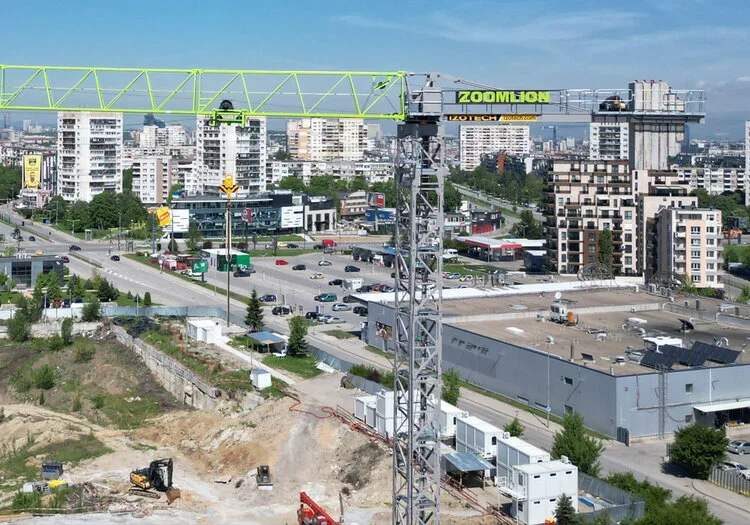
What is the role of cranes in construction?
The primary function of a crane is to lift and move heavy materials—concrete elements, metal structures, formwork systems, construction materials, machinery, and equipment.
Depending on the type of project, various types of cranes can be used—tower cranes, truck cranes, mobile cranes, mini cranes, and other specialized solutions. The choice depends on the scale of the project, the working height, the weight of the loads, access to the site, and the specific on-site conditions.
Greater safety on the site
Construction sites are often dynamic and high-risk environments.
Work involves heavy materials, large structures, and machinery, and crew safety must always come first. Cranes help precisely with this—they reduce the need for manual handling of heavy loads and allow materials to be positioned in a more controlled and safe manner. When the machine is properly selected, maintained, and operated by a qualified operator, the risk of accidents is significantly reduced. Of course, safe crane operation requires good organization, a clear lifting plan, a prepared site, and compliance with all operational requirements.
Time Savings
In construction, time is of the essence. Delays can lead to additional costs, a disrupted schedule, and difficulties in the subsequent stages of the project. Cranes speed up the process because they allow for the rapid movement of heavy materials and structures to the exact position. This is particularly important in high-rise construction, the installation of large elements, work with formwork systems, or the delivery of materials to hard-to-reach areas of the site. Well-planned crane operations can significantly improve the pace of the construction process and help the team carry out tasks in a more organized manner.
Greater Efficiency
A crane doesn’t just lift loads—it helps the entire site operate more efficiently. When materials are delivered on time and positioned exactly where they’re needed, the construction team can work faster and with fewer unnecessary movements. This is especially important on large sites, where coordination between different teams is crucial. A well-chosen crane can serve multiple work zones and facilitate the execution of various activities within the project.
Working in Confined Spaces
Not every construction site has a large and convenient area. In urban environments, work is often carried out in confined spaces, close to other buildings, streets, or active infrastructure. That is why choosing the right crane is very important. Depending on the conditions, more compact machines, mobile cranes, or other solutions can be used that allow for safe operation even in more challenging access situations. Modern cranes are designed to be more precise, more reliable, and more adaptable to various construction scenarios.
Cost Optimization
At first glance, using a crane may seem like a significant expense, but in many cases, it saves money in the long run. The reason is simple—the crane speeds up the work, reduces the need for additional manual labor, and helps improve the organization of the construction process. For many companies, renting a crane is a practical solution, especially when the machine is needed only for a specific stage of the project. This avoids a large investment in purchasing, maintaining, and storing equipment that won’t be used continuously.
Why is choosing the right crane important?
Not every crane is suitable for every job site. Before selecting a machine, several key factors must be considered—what load will be lifted, at what height will work be performed, what is the site access like, what is the project duration, and what are the on-site conditions.
The right choice helps avoid delays, unnecessary costs, and technical difficulties. That is why it is best to make the decision after consulting with a specialist who can recommend the most suitable equipment based on the specific needs of the project.
Cranes as Part of Modern Construction
Today, cranes are an indispensable part of the construction industry. They are used not only in the construction of buildings but also in infrastructure projects, industrial construction, installation work, and a range of specialized projects. Their role is clear—greater safety, improved efficiency, faster execution, and better control over the work process.
IZOTECH Group offers solutions for various construction projects and can assist in selecting the appropriate tower cranes based on the project’s specifics, working conditions, and required capacity.
When the equipment is properly selected, the construction process proceeds in a more organized and safer manner, yielding better results.