
Different Types of Formwork — How to Choose the Right One for Your Project?
Formwork is one of the key elements in the construction of concrete and reinforced concrete structures. The correct choice of formwork system determines not only the shape and quality of the finished structure, but also the speed of work, site safety, and cost optimization.
It is important to consider the type of project, the complexity of the structure, the construction schedule, the available machinery, and the number of times the system will be reused.
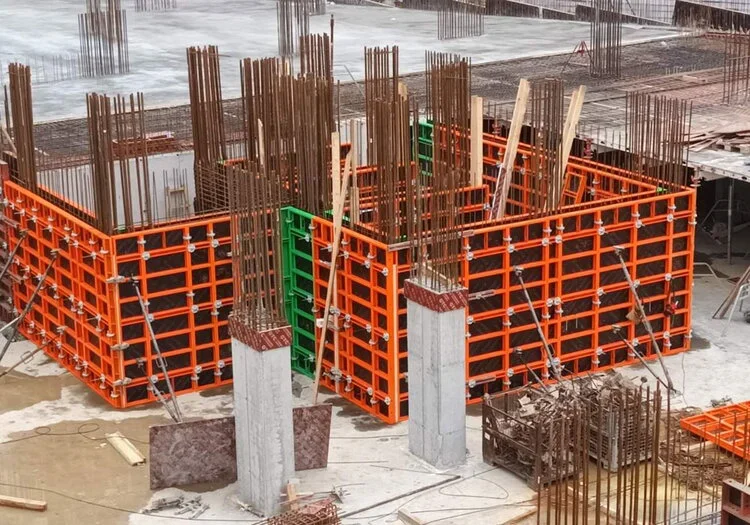
What is formwork?
Formwork is a temporary or reusable structure into which concrete is poured until it acquires the required shape and strength. It must be sufficiently stable, precise, and durable to withstand the load from the fresh concrete, the reinforcement, and the construction process on-site.
In practice, different types of formwork are used depending on their purpose—for walls, slabs, columns, foundations, elevator shafts, infrastructure facilities, and other specific structures.
Wall Formwork
Wall formwork is used in the construction of concrete walls, retaining walls, elevator shafts, basements, tanks, and other vertical structures. It is suitable for both residential and industrial construction, as well as for larger-scale infrastructure projects.
The main advantage of a modular wall formwork system is that it allows for faster work, better structural geometry, and a higher-quality concrete surface. For larger projects, choosing such a system can significantly reduce installation and dismantling time.
Slab Formwork
Slab formwork is used for the construction of horizontal concrete elements—floor slabs, roof slabs, ramps, and other similar structures.
This type of formwork must provide stable support during concrete pouring and allow the crew to work safely. When selecting it, it is important to consider the slab thickness, support height, load-bearing capacity, and the ability to move quickly between the various stages of construction.
Column Formwork
Column formwork is designed to shape vertical load-bearing elements with various cross-sections—square, rectangular, or round. It is particularly important for buildings with reinforced concrete load-bearing structures, industrial warehouses, and infrastructure facilities.
Well-selected column formwork allows for precise execution, stability during concrete pouring, and a better final appearance of the structure. For repetitive elements, system solutions are particularly effective because they save time and reduce the need for additional adjustments.
Formwork for foundations
Foundation formwork is used in the construction of footings, strip foundations, foundation slabs, and other elements that bear and transfer loads to the ground.
In this type of work, stability, dimensional accuracy, and the system’s stability during concrete pouring are of utmost importance. Proper preparation of the foundation and correct installation of the formwork are crucial for the quality of the entire structure.
System formwork or traditional formwork?
Traditional formwork is usually constructed on-site using lumber and plywood.
It may be suitable for small projects, non-standard shapes, or individual elements where repeated use of the same system is not necessary.
System formwork, on the other hand, is more suitable for professional construction projects where speed, repeatability, safety, and better process organization are required.
It consists of prefabricated elements that are assembled according to a specific plan and can be reused multiple times.
How to choose the right formwork?
The best choice depends on the specific project. In residential construction, solutions are often needed for slabs, walls, columns, and foundations. For industrial and infrastructure projects, more durable systems are usually sought that allow for work on larger areas, higher loads, and a more intensive construction schedule.
Before choosing formwork, it is a good idea to answer a few key questions:
What type of structure will be built?
How large is the site?
How many times will the formwork system be used?
Is there a crane or other machinery on site?
What are the project deadlines?
What quality of concrete surface is required?
The answers to these questions help you choose a solution that is both technically sound and economically justified.
Why is professional consultation important?
Formwork is not merely an auxiliary element in construction. It has a direct impact on the quality, safety, and efficiency of the entire process. An improperly selected system can lead to delays, additional costs, and difficulties during execution.
Therefore, when selecting formwork, it is advisable to work with a partner who understands the specifics of various projects and can offer a practical solution tailored to the project’s needs.
ISOTECH GROUP offers formwork systems and solutions for various types of construction projects—from residential and public buildings to industrial and infrastructure projects. The company’s team can assist in selecting the appropriate system based on the specific requirements of the project, the schedule, and the method of work.
The right formwork saves time, improves the quality of execution, and helps the construction process proceed more predictably and safely.