
Useful information when renting construction equipment
Renting construction equipment is a practical solution for both businesses and private customers who need a machine for a specific project but do not plan to purchase one. This is especially true for temporary projects, major renovations, construction sites, or tasks where specialized equipment is needed only for a limited period.
Instead of investing in expensive equipment that you may not use regularly, renting allows you to have the right machine available exactly when you need it. This way, you can optimize your costs, plan more flexibly, and complete the project more efficiently.
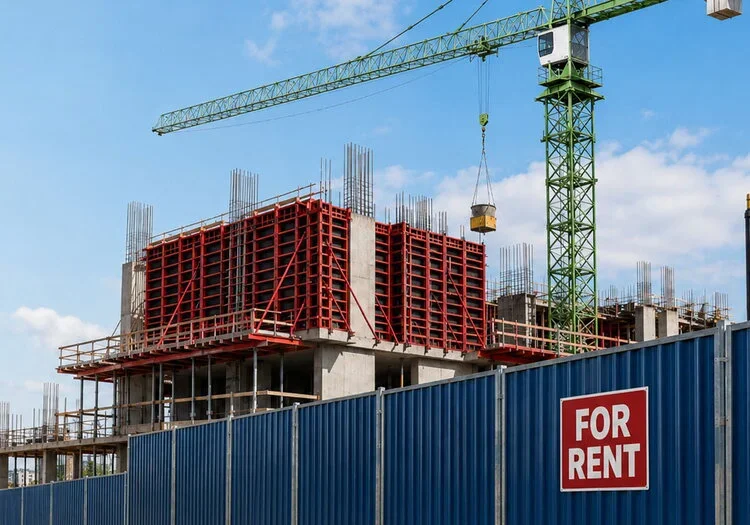
Before renting construction equipment, however, it’s important to consider a few key factors.
Determine your budget
One of the main advantages of renting is that it can save you significant costs. If you need a machine only for a specific task, purchasing it is often not the best solution. In such cases, renting is a more flexible and cost-effective option.
It’s a good idea to set your budget in advance and assess what equipment you need. The cheapest option isn’t always the most suitable. It is more important that the machine is suited to the work that needs to be done and helps the project proceed without unnecessary delays.
Estimate how long you will need the equipment
Before placing an order, consider how long you will be using the equipment. Will you need it for one day, a few days, a week, or longer?
The better the site is prepared in advance, the more efficiently you will use the rented equipment. If the machine arrives but the site isn’t ready or the team isn’t organized, this can lead to unnecessary delays and additional costs.
That is why it is important to plan all preparatory activities in advance—site access, workspace, operator, transportation, and a clear division of tasks.
Match the equipment to the type of project
Different projects require different types of equipment. For residential construction or renovation, more compact equipment that can operate in confined spaces may be necessary. For larger construction and infrastructure projects, machines with greater capacity, higher productivity, and the ability to operate under more demanding conditions are typically required.
For example, for activities involving moving, loading, or lifting materials, telescopic loaders, front-end loaders, or crane equipment may be suitable. For excavation work, the choice depends on the terrain, the depth of the excavation, and the scale of the project.
The more precisely the task is defined, the easier it is to choose the right machine.
Check the rental terms
Before renting equipment, it is important to familiarize yourself with the terms—rental period, transportation, maintenance, liability in case of damage, the need for an operator, and the option to extend the rental period.
These details often seem minor, but they can be crucial for project organization. Clear terms help you avoid misunderstandings and plan your costs more accurately.
Don’t underestimate safety
Working with construction equipment requires attention and preparation. Machines must be operated by qualified operators and in compliance with all safety requirements.
Before starting work, it is advisable to ensure that the site is prepared, access is secured, and the team knows what tasks lie ahead. This reduces the risk of accidents and helps the work proceed in a more organized manner.
Seek professional advice
If you are unsure which machine is best suited for your site, it is best to consult a specialist. Sometimes the difference between two machines may seem small, but in practice it can make a big difference in terms of speed, safety, and work efficiency.
An experienced team can guide you toward the right equipment based on the type of project, site conditions, deadline, and budget.
IZOTECH Group offers solutions for construction sites of various scales and can assist in selecting the appropriate equipment based on the specific needs of the project.
Properly selected construction equipment helps you save time, optimize costs, and complete the work more safely and efficiently.